Experience Matters: Why Millburn Needs Proven Leadership in Uncertain Times
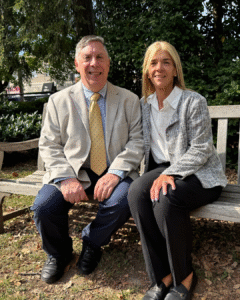
In an era of political misinformation and divisive rhetoric, Millburn Township needs experienced, proven leaders like Annette Romano and Michael Cohen who deliver results through bipartisan collaboration and fiscal responsibility.
Key Takeaways
- Romano and Cohen have delivered measurable results: zero municipal tax increases for two years, record crime reduction, and millions in secured grants—demonstrating fiscal responsibility without sacrificing services
- Experience translates to effective governance: Romano’s 25 years of board service and Cohen’s corporate financial management expertise have brought professionalism and stability to Township Committee operations
- Bipartisan collaboration works: Under Romano & Cohen’s mayoral leadership, the Township Committee has functioned effectively across party lines, with Romano and Cohen often voting with Republican committee members when it serves Millburn’s interests
- Political misinformation thrives in local elections: Research shows voters become more susceptible to misleading claims during election cycles, making it essential to focus on verified records and measurable accomplishments
- Proven leaders protect Millburn’s future: From fighting the Nine Main Street project in court to securing green space grants and addressing flooding, Romano and Cohen have demonstrated consistent advocacy for residents
A Tale of Two Campaigns: Substance Versus Rhetoric
In the October 2025 Short Hills Association candidate forum, Millburn Township residents witnessed a stark contrast between two approaches to local governance. On one side stood Mayor Annette Romano and Deputy Mayor Michael Cohen—a 60-year Millburn resident with 25 years of public service and an MBA-credentialed financial executive from JP Morgan Chase. On the other stood their challengers, both serving on the Board of Education, who repeatedly invoked the names of the current Republican committee members while offering limited details about their own qualifications for township governance.
The difference wasn’t just in experience—it was in how each ticket approached the fundamental question of local government: Do you govern based on measurable results and bipartisan collaboration, or do you govern based on partisan talking points while claiming to be above politics?
The Puzzle of Party-Line Rejection
Perhaps the most curious aspect of the challenger campaign is its relationship with political affiliation. Throughout the forum, Republican candidates Jamie Serruto and Kris Heinrichs emphasized their “Vote for Millburn” platform and insisted they would govern “on behalf of all residents regardless of party.” Yet they openly campaigned as Republicans, selected by the Millburn-Short Hills Republican Committee, and repeatedly criticized “party politics” while running on an explicitly partisan ticket.
This raises an obvious question: If partisan politics are truly the problem, why not run as independents?
The answer reveals the fundamental contradiction at the heart of their campaign. They want the organizational support, fundraising network, and voter base that comes with major party affiliation—but they also want to distance themselves from that affiliation when it’s politically convenient. This isn’t transcending politics; it’s having it both ways and deception.
Mayor Romano, by contrast, has been straightforward about her approach: “I don’t look to the Democratic committee ever when making policy decisions. It’s not their job.” Her record bears this out. As she noted at the forum, “I voted for Ben [Stoller] more than Frank [Saccomandi] has“—referring to the two Republican committee members currently serving alongside her. That’s not partisan politics; that’s governing based on the merits of each issue.
The Misinformation Challenge: What Research Reveals
Before examining the specific claims made during the campaign, it’s worth understanding why local elections have become breeding grounds for misleading narratives. Research from MIT Sloan School of Management found that “voters across party lines are more likely to believe news stories that confirm their preexisting biases during an election cycle than they are during nonelection time frames.”
Professor Charles Angelucci, who led the study, explained: “It’s almost as if our defenses against misinformation go down during the election, which is exactly the time when we need to make up our minds.” Even highly educated voters—those the researchers called “high-discernment groups”—become “at least as partisan as other groups during elections.”
This psychological vulnerability explains why campaign rhetoric often focuses on creating fear and doubt rather than presenting concrete plans. According to the Brookings Institution’s analysis of the 2024 presidential election, “false claims affected how people saw the candidates, their views about leading issues such as the economy, immigration, and crime, and the way the news media covered the campaign.”
The antidote? Focus on verified, measurable accomplishments rather than unsubstantiated claims.
The Romano-Cohen Record: Results You Can Verify
Public Safety: From Rhetoric to Reality
At the Short Hills Association forum, the challenger candidates repeatedly credited Township Committee Republicans Frank Saccomandi and Ben Stoller for crime reduction initiatives. Yet the factual record tells a different story.
As Mayor Romano stated directly: “We hired more police officers and made more investments in crime-fighting technology before Ben and Frank were even on the township committee.” She continued: “These initiatives, except for the home assessment program, began prior to 2024.”
The evidence supports her timeline:
- Police staffing increases were implemented beginning in 2022
- License plate reader technology was installed before the 2023 election
- The community policing unit was established under Romano’s leadership
- The burglary patrol program predates the current committee composition
Committeeman Cohen elaborated: “In my first term, crime has been reduced, and it is imperative that these additions will help ensure it stays down.” He specifically noted his initiative: “I initiated a free home security review by our community police team so that they can help residents identify ways to make their homes more secure. Over 150 households have participated so far.”
These aren’t talking points—they’re verifiable programs that any resident can confirm with the police department. The home assessment program launched in 2024 has enrolled 150 families in its first months, providing tangible security improvements rather than just promises.
Fiscal Responsibility: The Numbers Don’t Lie
Michael Cohen’s background as a technology project manager and later as part of JP Morgan Chase’s government reporting group—working directly with Federal Reserve and SEC regulators—prepared him uniquely for township financial oversight. As he explained at the forum: “This combination of financial and business skills has served me well on the township committee.”
The results speak for themselves:
- Zero municipal tax increases in Cohen’s first two years on the committee
- One penny increase in 2023, driven primarily by healthcare cost inflation beyond the township’s control
- Record grant funding secured, bringing millions in state and federal dollars to Millburn
- 75% green acres grant coverage for the Taylor Park accessible playground—a project Cohen advocated for after noticing the existing facility had fallen into disrepair
When asked about fiscal management at the forum, Cohen was specific: “I’ve worked closely with our township administrator and CFO to ensure taxpayer dollars are spent wisely.” This isn’t vague rhetoric about “running government like a business“—it’s applying proven financial controls from heavily regulated corporate environments to public sector budgeting. View current municipal budgets.
Compare this to the challengers’ financial platform, which Kris Heinrichs described primarily as bringing “financial controls” from his experience in his advertising and technology firm. While private sector experience has value, there’s a crucial difference between managing a for-profit company and stewarding public funds subject to municipal finance laws, state oversight, and public accountability requirements. Cohen has worked in both worlds.
Infrastructure Investment: Building for the Future
Mayor Romano outlined the concrete infrastructure improvements underway or completed during her term:
- Town Hall renovation (in progress)
- Paper Mill Playhouse renovations (funded with grants)
- New inclusive playground at Taylor Park (75% grant-funded)
- Taylor Park renovations (underway)
- Flood mitigation efforts in South Mountain and Gilbert Place
- Newly commissioned study addressing Glenwood flooding near Cora Hartshorn Arboretum
When Heinrichs questioned whether residents had been consulted on Paper Mill Playhouse funding versus flood mitigation priorities, he missed the fundamental point: these weren’t either/or choices. The investment in the Paper Mill was primarily facilitated through land leased to the Paper Mill Playhouse. Millburn is projected to recover its investment over time through rental income generated by the theater.
This is the difference between governing and campaigning. Governing requires understanding funding streams, grant opportunities, legal constraints, and how to leverage resources. Campaigning just requires asking, “why didn’t you do the other thing?”
Affordable Housing: Fighting While Following the Law
No issue has generated more heated rhetoric than affordable housing and development. At the forum, Heinrichs delivered a lengthy condemnation of the “Round Three” affordable housing settlement, calling it “the single worst deal in the history of the state” and claiming that “Romano and Cohen were responsible for advancing the project, finalizing the designation of RPM as developer.”
The factual timeline contradicts this narrative. As Mayor Romano stated clearly: “Michael and I were not on the Township Committee when the Nine Main Street project was voted on. And we also didn’t have anything to do with the way that the Democratic Township Committee at the time voted.”
Both Romano and Cohen were elected in November 2021. The Round Three housing settlement and developer designation decisions were made by previous committee members. Upon taking office, Romano and Cohen immediately took action against the Nine Main Street project. As Romano emphasized: “When I ran three years ago, I told everyone I was against the awful, ill-conceived nine Main Street project. When I was elected by my peers to be mayor, I voted to stop it. I went to court to stop it, and I will continue to fight to stop it.”
The legal reality is sobering: “All of our votes to fight it have been unanimous; we continue to be overruled by the court,” Cohen explained. “Today we filed our appeal to a higher court in this matter, and we’ll see where that takes us.” Read more about Millburn’s legal battle.
This is governing under constraint—doing everything legally possible to oppose a bad project while acknowledging the limits of municipal authority when courts enforce state affordable housing mandates. The challengers offer passionate rhetoric about what they would do; Romano and Cohen show what they’ve actually done within the legal framework.
Notably, Romano is the one of the elected officials named in a lawsuit challenging affordable housing policies—demonstrating the depth of her commitment to fighting overdevelopment. “I’m the only one up here who’s personally named in a lawsuit against affordable housing,” she stated at the forum. “That’s how strongly I feel about it.”
Round Four: A Better Process Under Current Leadership
While the challengers focus entirely on criticizing Round Three decisions made before Romano and Cohen took office, they give minimal credit for the dramatically improved Round Four process that occurred under the current committee’s tenure. As Serruto reluctantly acknowledged, the Round Four mandate was reduced from 534 units to 132 units the rules require a plan for 25% of the requirement. More housing is stil needed to complete the requirements.
More importantly, the Round Four process included:
- A Citizens Advisory Committee for public input
- Transparent filing procedures (no “three days late” filings like previous administrations)
- Public information sessions before votes
- Senior housing prioritization
- Site selection avoiding contaminated dump locations
- No developer challenges to the plan
Romano was direct about this: “These are conversations taking place with the board of ed now to work together to provide much needed fields at the high school.” This cross-governmental collaboration represents the kind of long-term planning the challengers claim to support but that Romano and Cohen have actually implemented.
The Experience Gap: Service Versus Preparation
At the forum, Serruto made much of having “served the longest in elected office” among the four candidates, referring to his three years on the Board of Education. However, the facts tell a different story. He served three years, but they weren’t consecutive. He serviced a one year term,then two years of his three year term in which, Serruto resigned from his Board of Education position on December 31, 2022—before completing his elected term—to pursue work and study opportunities in Rome, Italy.
While pursuing educational and career opportunities abroad is certainly understandable for a young professional, it raises questions about the claim of extensive public service experience. Serruto was elected to a three-year term in 2020, but chose to leave midway through that commitment. He left public office for personal development, a reasonable choice, but then returned to run for an even more demanding position without completing the commitment he’d made to voters.
By contrast, Mayor Romano has served on township boards “for the past 25 years in some capacity”—not three years with an early departure, but 25 continuous years of showing up, staying engaged, and seeing commitments through. She’s served through multiple economic cycles, worked with multiple township administrators, and navigated the complex intersection of state mandates, county coordination, and local needs that define township governance. She never walked away mid-term for personal opportunities; she stayed committed to the residents who elected her through good times and challenging ones. Michael Cohen will complete his full three-year term on the Township Committee December 31, 2025 and is seeking reelection after proving he can deliver results. That’s not just more time—it’s a fundamental difference in understanding how municipal government operates and demonstrating the perseverance that township governance requires.
Beyond board service, Romano’s community leadership includes:
- 60-year Millburn resident (the only candidate who’s lived nowhere else)
- Founder and operator of the Millburn Food Pantry since 2019—”which became crucial during COVID when many of our residents lost their jobs”
- Volunteer service in schools, PTOs, Girl Scouts, and American Red Cross
- 24/7 accessibility to residents as mayor
Michael Cohen brings equally relevant but different expertise:
- MBA from Northwestern University’s Kellogg School of Management
- Technology project management experience at JP Morgan Chase
- Government reporting group management, interfacing directly with Federal Reserve and SEC regulators
- Financial and business skills that “allowed me to get up to speed quickly on various issues”
Kris Heinrichs described his background as “a seasoned financial executive with over 20 years of experience running advertising and technology firms” with “deep experience in management and financial controls.” This is certainly valuable, but his experience is in running private companies for profit, not in public sector governance subject to municipal finance law, open public meetings, state oversight, and democratic accountability.
Jamie Serruto’s background includes service as class president at Millburn High School and approximately three years on the Board of Education, though he resigned before completing his elected term to pursue opportunities abroad. He’s young, enthusiastic, and clearly dedicated to the community. At the forum, he emphasized his role as “president of the Millburn Short Hills 4th of July committee,” and noted his involvement in various community events.
While volunteer community service is admirable and valuable, there’s a fundamental difference between organizing a parade and managing a municipal budget exceeding $68 million. Planning the July 4th celebration requires coordination, dedication, and community spirit —worthy qualities. But it doesn’t involve:
- Navigating state procurement laws and municipal finance regulations
- Negotiating multi-year collective bargaining agreements with police and public works unions
- Managing capital infrastructure projects with engineering specifications and regulatory compliance
- Interpreting complex state mandates on affordable housing, environmental protection, and land use
- Working with county, state, and federal agencies on grant applications and intergovernmental coordination
- Making real-time emergency management decisions during natural disasters or public safety incidents
- Balancing competing priorities within fixed budget constraints while maintaining essential services
Michael Cohen’s experience managing government reporting at JP Morgan Chase—where he worked directly with Federal Reserve and SEC regulators—prepared him for exactly these challenges. Annette Romano’s 25 years navigating township boards through multiple administrations gave her institutional knowledge that can’t be acquired in three years on any single board.
The challengers’ community involvement demonstrates good citizenship. But township committee governance requires specific expertise in public administration, municipal law, labor relations, infrastructure planning, and intergovernmental coordination that simply doesn’t transfer from organizing community events or serving on an education board.
There’s a reason experience matters; it isn’t just a slogan. Township committee members don’t get training periods or learning curves. From day one, they vote on multi-million dollar infrastructure projects, negotiate with public employee unions, respond to emergency situations, interpret complex state regulations, and make decisions that affect 22,000 residents.
Township committee work demands unwavering commitment. Romano and Cohen consistently demonstrate this, having never abandoned an elected position mid-term. Cohen, for instance, completed his initial term and is now seeking re-election. Their consistent preparedness and dedication stand in contrast to the challengers, who would be learning on the job. This inexperience might explain their repeated references to their Republican party members Frank Saccomandi and Ben Stoller. Residents would bear the cost of the challengers’ limited experience, with no assurance that they would remain to see their initiatives through.
The Transparency Record: Actions Speak Louder Than Criticism
The challenger candidates repeatedly claimed that Romano and Cohen lack transparency and don’t adequately involve residents. The factual record contradicts these claims:
Mayor Romano enumerated her transparency initiatives:
- Added a second public comment session at Township Committee meetings
- Changed the mayor’s message to “township message” sent from different voices weekly
- Held multiple public sessions on major initiatives like the gas-powered leaf blower ordinance
- Responds personally to every email and phone call from residents
- Maintains 24/7 accessibility
Committeeman Cohen added specific improvements he’s implementing:
- Discovered that new business items weren’t included in public agenda packets, and is working to change that
- The door is “always open” with the township email listed on the website
- Has spoken with residents about concerns throughout his three-year term
Contrast this with the vague promises from challengers about what they “will” do—office hours, better communication, more transparency—without acknowledging what’s already being done.
The most telling transparency issue emerged when Serruto claimed Romano and Cohen “removed the Zoom function as soon as they got into office.” Romano immediately corrected the record: “We did not remove the Zoom function when we got into office. So that’s one thing. The Zoom function continued.”
This exemplifies the misinformation problem in local elections. A false claim gets made, travels through social media and door-to-door conversations, and becomes accepted as fact by some voters—despite being demonstrably untrue. The Zoom function for public participation remains available at every Township Committee meeting.
The Bipartisan Reality Versus Partisan Rhetoric
Perhaps the most significant disconnect between rhetoric and reality involves the question of partisan versus bipartisan governance. The challenger candidates built their campaign around opposition to “party politics” and “toxic” partisanship. Yet Romano and Cohen’s actual governing record demonstrates meaningful bipartisan collaboration, a collaboration the challengers’ rhetoric doesn’t match.
Mayor Romano stated directly: “I voted for Ben more than Frank has.” This refers to voting alignment with Republican committee member Ben Stoller versus voting alignment between the two Republicans themselves. That’s not partisan blocking—that’s evaluating each issue on its merits regardless of which committee member proposes it.
Committeeman Cohen made his independent decision-making explicit: “I vote based on my principles, not party positions. For example, I’ve disagreed with Mr. Saccomandi and agreed with Mr. Stoller on Explore Millburn and the Paper Mill. I disagreed with Mr. Stoller and agreed with Mr. Saccomandi on historic preservation and zoning changes.”
Cohen elaborated on how he approaches governance: “We shouldn’t have rubber-stamp votes on the committee. Residents deserve members who think critically, act independently, and prioritize what’s best for Millburn. That’s exactly how I’ve approached every vote during my term.”
This is what actual nonpartisan governance looks like—not refusing to acknowledge party affiliation while running on a party ticket, but making decisions based on policy merits regardless of who proposes them or what party they represent. View meeting minutes to verify voting records.
Addressing Legitimate Concerns: Solutions Over Slogans
The challengers raised several legitimate concerns that deserve serious responses—concerns about pedestrian safety, development impacts, traffic management, and school capacity. The difference is that Romano and Cohen can point to concrete actions they’re taking on these issues, not just promises about what they would do.
Pedestrian and Traffic Safety
When asked about the recent accident near the Annie Says development and general traffic concerns, Romano outlined specific measures: “I am in favor of additional traffic beacons throughout town at our busy intersections.” She acknowledged the enforcement challenge: “The bottom line is drivers just aren’t paying attention. So, as a pedestrian, you just have to be very careful and aware.”
Cohen added the enforcement dimension: “Some of it is enforcement. I mean, we have certain things in place, stop signs, like for example, the four-way stop sign at Hobart and Highland, and drivers don’t know what to do when they get to them, or maybe they know they don’t care because they’re in a hurry.”
The challengers called for a “comprehensive traffic study”—which is reasonable and something Romano and Cohen support. But they also acknowledged that some traffic challenges stem from development projects approved before they took office, and that improving safety requires enforcement, infrastructure investment, and changing driver behavior—not just studies.
Fields and Recreation
All four candidates agreed on the need for more recreational field space. The difference is that Romano and Cohen are actually working on it through the collaborative BOE/Township Committee project that Heinnrichs helped advance as a BOE member.
As Cohen explained: “I was added to the committee at Ben Stoller’s request because he knows of my fiscal conservatism to make sure that the project was an equitable project between the board of ed and the township.” This demonstrates the kind of cross-board collaboration and fiscal oversight that township governance requires.
Romano noted: “These are conversations that have been going on for years, and we need to figure out a way to provide our residents and children with a much-needed cricket pitch.” Rather than promising everything immediately, she’s working through the legal, financial, and logistical complexities of joint BOE-Township projects.
Flood Mitigation
Flooding remains one of Millburn’s most challenging infrastructure issues. Romano was straightforward: “Are we done? Absolutely not. But if I’m reelected, the hard work in addressing our flooding issues will continue.”
Cohen provided specifics: “Flooding remains a serious concern, and while we can’t eliminate extreme weather, we can reduce its impact through smart infrastructure investments that include additional drainage work in South Mountain, upgrades to the Gilbert Place pump station, and a newly commissioned study to address Glenwood flooding near the Cora Hartshorn Arboretum.”
This isn’t flashy—it’s the unglamorous work of infrastructure improvement that requires engineering studies, capital budget planning, grant applications, and multi-year implementation. The challengers can promise to “solve flooding,” but Romano and Cohen are actually doing the work of incremental improvement within budget constraints.
The Curious Case of Credit Assignment
Throughout the campaign and forum, the challengers repeatedly credited current Republican committee members Frank Saccomandi and Ben Stoller with accomplishments that predated their tenure or that Romano and Cohen initiated. This pattern reveals more about campaign strategy than governing reality.
For example, Heinrichs stated: “Frank and Ben started the practice of responding to township comments immediately” during public sessions. Yet as the actual timeline shows, many of the programs and practices the challengers attribute to Saccomandi and Stoller were initiated earlier.
Mayor Romano addressed this directly: “The real question should be why are Ben and Frank taking credit for our success.” She noted that police hiring and crime-fighting technology investments began before the current Republican members took office.
This isn’t about diminishing Saccomandi and Stoller’s contributions—Romano explicitly praised working collaboratively with them. It’s about accuracy in describing who did what and when. If Romano and Cohen can work effectively with Republican committee members (as their voting records demonstrate), and if they initiated many of the programs the challengers praise, why replace them?
The answer seems to be purely partisan: the challengers will never admit it. But that’s exactly the kind of party-over-policy thinking they claim to oppose.
Why Experience Matters More Than Ever
Local government challenges: climate change driving more frequent flooding, workforce shortages affecting service delivery, state mandates on housing that override local control,
infrastructure aging beyond its design life, and tight budget constraints that force difficult tradeoffs.
In this environment, on-the-job learning isn’t just inefficient—it’s costly to residents. Every vote a new committee member casts while “getting up to speed” on municipal finance affects real budgets. Every negotiation with employee unions conducted by someone learning labor law affects compensation and service delivery for years. Every infrastructure decision made without understanding engineering constraints and grant funding cycles affects whether projects succeed.
Annette Romano and Michael Cohen have already climbed this learning curve. They’ve navigated the state’s complex affordable housing mandates, worked with multiple county and state agencies, managed major capital projects, and built relationships with the professional staff who make township government function day-to-day.
On-the-job learning in this environment is not only inefficient but also costly to residents. New committee members’ votes, cast while they are still “getting up to speed” on municipal finance, directly impact real budgets. Negotiations with employee unions, handled by individuals unfamiliar with labor law, have long-term consequences for compensation and service delivery. Infrastructure decisions made without a grasp of engineering constraints and grant funding cycles determine the success or failure of projects.
Annette Romano and Michael Cohen, however, have already mastered this. They possess extensive experience navigating the state’s complex affordable housing mandates, collaborating with various county and state agencies, managing significant capital projects, and cultivating relationships with the professional staff essential to the daily functioning of township government.
As Cohen noted: “There is a learning curve in local government and that’s why experience matters.” This isn’t just abstract theory; it’s the difference between a committee that functions smoothly and one that stumbles through preventable mistakes.
The Path Forward: Proven Leadership for Millburn
The October 2025 Short Hills Association forum revealed the fundamental choice facing Millburn voters: experience and proven results versus enthusiasm and future promises.
Annette Romano brings six decades of Millburn residency, 25 years of board service, and a demonstrated commitment to serving all residents—from running the food pantry to maintaining 24/7 accessibility as mayor. Her record of reducing crime, securing grants, fighting
overdevelopment in court, and governing in a truly bipartisan manner speaks louder than campaign slogans about “putting residents first.”
Michael Cohen brings the financial discipline of working with federal regulators, the organizational skills from managing complex technology projects, and the fiscal conservatism that delivered zero municipal tax increases in his first two years. His initiatives—from the home security assessment program to the accessible Taylor Park playground—demonstrate a commitment to tangible improvements rather than just talking points.
Together, they’ve proven they can work effectively with Republicans on the committee when ideas have merit, while maintaining the independence to vote in line with Millburn’s interests rather than party positions.
Our challengers are earnest, well-meaning, and clearly care about Millburn. But caring isn’t enough. Township governance requires specific expertise, institutional knowledge, established relationships with county and state officials, an understanding of regulatory constraints, and experience navigating the complex challenges that define modern municipal government.
The challengers promise to learn these things if elected. Romano and Cohen already know them and have the track record to prove it.
In an era when political misinformation makes it harder than ever to discern fact from fiction, voters should focus on what can be independently verified: tax records showing fiscal responsibility, police statistics showing crime reduction, completed infrastructure projects showing effective management, and voting records showing bipartisan collaboration.
These aren’t campaign promises. They’re accomplishments residents can confirm with township records, their own tax bills, and their own observations of a community that continues to thrive despite unprecedented challenges.
That’s what experience delivers. That’s what Millburn needs. Our challengers genuinely care about Millburn, but care alone isn’t enough. Effective township governance demands specific expertise, institutional knowledge, established relationships with county and state officials, an understanding of regulatory constraints, and experience in navigating the complex challenges of modern municipal government.
While the challengers promise to acquire these skills if elected, Romano and Cohen already possess them, and their track record serves as proof.
In a political climate where misinformation makes it difficult to distinguish fact from fiction, voters should prioritize independently verifiable accomplishments: tax records demonstrating fiscal responsibility, police statistics showing crime reduction, successfully completed infrastructure projects, and voting records indicating bipartisan collaboration.
These are not mere campaign promises; they are achievements residents can confirm through township records, their own tax bills, and their observations of a community that continues to flourish despite unprecedented challenges. This is the result of experience, and it’s precisely what Millburn needs.
A Note About This Campaign Season
The research on election-year misinformation cited earlier in this article isn’t just academic theory, it’s playing out in real time in local campaigns across New Jersey, including Millburn. When challengers make claims that don’t align with documented timelines, when they credit recent committee members for programs that predate their service, when they promise transparency improvements that already exist, they rely on voters not checking the facts.
The antidote isn’t just fact-checking individual claims, though that’s important. It’s focusing on measurable, verifiable accomplishments. Did crime go down? Check the police statistics. Did taxes increase minimally? Check your tax bills. Are infrastructure projects actually happening? Drive by the construction sites.
This isn’t about partisan attacks or defending against misinformation. It’s about letting the record speak for itself—and that record overwhelmingly supports reelecting Annette Romano and Michael Cohen.
On November 4th, Choose Experience
Millburn deserves leadership that has already proven effective, not candidates who promise to figure it out after Election Day. The choice is clear: proven experience, measurable results, and bipartisan collaboration.
Vote Annette Romano and Michael Cohen for Millburn Township Committee.
Resources:
Campaign Information:
- Romano and Cohen Campaign Website
- TAPinto Candidate Profile: Annette Romano
- TAPinto Candidate Profile: Michael Cohen
- Patch Candidate Profile: Michael Cohen
- Township Committee Candidate Forum-2025
Official Millburn Township Information:
- Township Committee
- Meeting Agendas & Minutes
- Municipal Finance & Budgets
- Police Department
- Community Policing Unit
- Parks & Recreation
News Coverage:
- InsiderNJ: Millburn Dems Endorse Romano and Cohen
- TAPinto: Democrats United Behind Romano & Cohen
- TAPinto Millburn Government Coverage
Verify the Facts:
- Millburn Police Department Statistics: Contact (973) 564-7000
- Millburn Tax Records: Municipal Finance Office
- NJ Election Law Enforcement Commission: Campaign Finance Disclosure
General Election Information:

